
AP Valletta's David Felice on AI, 'involution' and the next 35 years
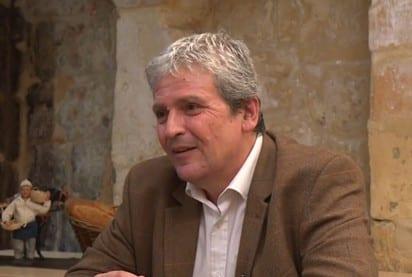
AP Valletta founder David Felice on AI reshaping architecture, the 'involution' strategy, and why Malta's density is a privilege.
After 35 years developing AP Valletta, David Felice is increasingly concerned with the architecture practice’s continuity: the people who will lead it, the knowledge it produces and the long-term quality of the places it shapes.
Felice co-founded the practice with Konrad Buhagiar in 1991. Its recent development includes an expanded leadership team and the AP Future Heritage Foundation, extending the firm’s research into the future of Malta’s built environment.
In an interview published by The Business Picture, Felice described how his definition of success had changed. Early recognition mattered, but the more important questions now concerned whether the practice could thrive beyond its founders and whether its work left places better than it found them.
That outlook connects succession planning with a broader argument about Malta’s development. Felice advocates concentrating more resources on adapting existing buildings and deepening their value within an island whose land is finite.
He uses the term “involution” to describe that approach: directing attention towards what already exists and understanding its potential more fully.
Technology forms part of the same thinking. AP Valletta has involved staff across seniority levels in practical AI workshops, with tools being incorporated into research, documentation, design and project management.
The clearest example is the practice’s LIMAP research project, which examines how AI can assist the identification and mapping of deterioration in Maltese limestone.
AP developed a dataset using high-resolution photographs, photogrammetric surveys and point-cloud information from historic façades. Technical partner Neural AI handled model training and the pipeline converting outputs into formats usable within CAD workflows, with collaboration from the University of Malta.
The work has reached a proof-of-concept stage. Its potential lies in helping conservation professionals document and monitor deterioration more efficiently, while retaining expert assessment within the process.
The AP Future Heritage Foundation provides another vehicle for research, bringing together design, sustainability and the interpretation of heritage.
For Felice, these initiatives support a practice built over decades. His advice to younger businesses is correspondingly patient: invest in research and people, understand the context and work with collaborators capable of challenging established thinking.
On an island where each project becomes part of a shared landscape, that approach makes professional continuity inseparable from responsibility for what is built.