
Malta's GDP Growth Accelerates in Q2 2026, Driven by Domestic Demand
Malta's real GDP grew faster in Q2 2026, powered by domestic demand. Inflation eased, and the labour market remained tight but showed signs of moderation.
Malta's economic expansion picked up pace in the second quarter of 2026, with annual real GDP rising faster than in the previous three months.
The Central Bank of Malta confirmed that growth was driven by domestic demand, even after accounting for imports. The pace of economic expansion remained above the euro area average.
Despite the stronger GDP figures, the Bank's Business Conditions Index moderated compared with the first quarter. That suggests the pace of economic activity during Q2 stayed broadly in line with its long-run average.
The labour market continued to perform positively. Activity and employment rates rose and stood above those in the euro area. The unemployment rate increased from a year earlier but remained well below the euro area level.
Labour market conditions remained tight but showed some signs of easing. Both the vacancy rate and the labour market tightness indicator decreased.
Consumer price inflation moderated during the second quarter. Annual HICP inflation declined to 2.0% in June from 2.3% in March. HICP inflation excluding energy and food also eased, standing at 2.2% in June from 2.4% previously.
Both headline HICP inflation and HICP excluding energy and food stood below the euro area average.
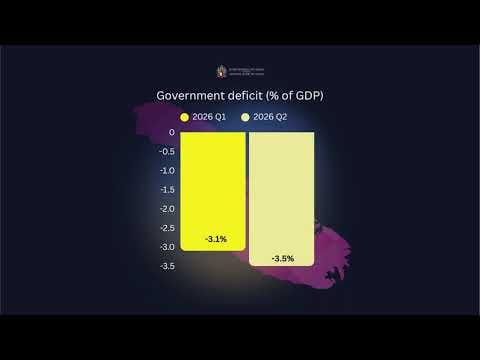
On the fiscal side, the general government deficit-to-GDP ratio on a four-quarter moving sum basis widened in the first quarter of 2026 compared with the previous quarter. It stood broadly in line with the euro area average. The debt-to-GDP ratio increased from the previous quarter but remained well below the corresponding euro area average.
The European Central Bank responded to inflationary pressures generated by the war in the Middle East by tightening monetary policy. The Governing Council raised its three key interest rates by 25 basis points in both its June and September meetings.
For Malta's business community, the combination of accelerating GDP growth, moderating inflation, and a still-tight labour market points to an economy that is expanding but facing capacity constraints. The ECB's rate hikes will increase borrowing costs, putting pressure on leveraged businesses and real estate developers. The moderation in the Business Conditions Index also signals that the pace of growth may be settling, not accelerating further.