
Malta's Tax Take Hits €7.47 Billion as Corporate Income Surges
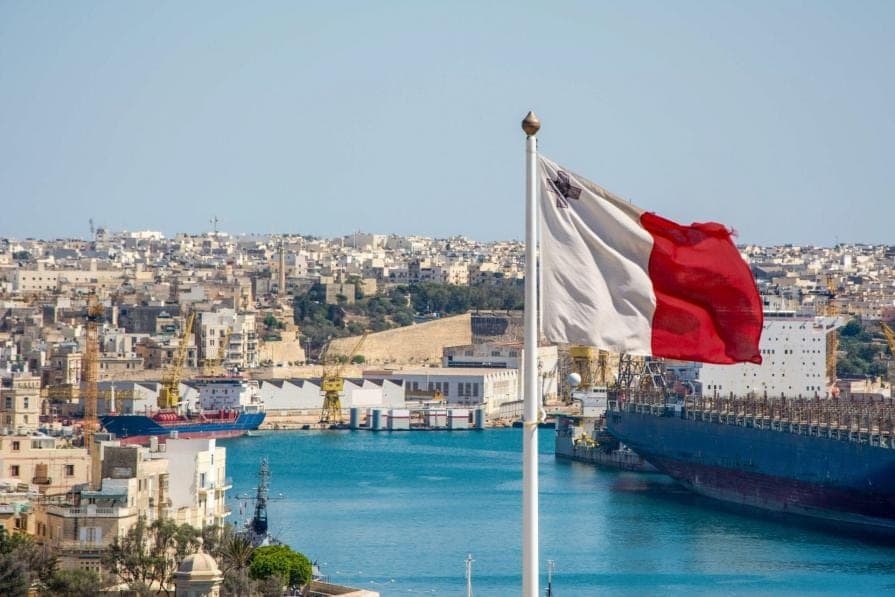
Malta's tax revenues climbed €698.9 million to €7.47 billion in 2025, with corporate income tax leading the charge. The tax burden now sits at 30.3% of GDP.
Malta's tax machine is running hotter than ever. New data from the National Statistics Office shows total tax revenues reached €7,471.6 million in 2025, a jump of €698.9 million over the previous year. That haul now accounts for 86.4 per cent of all general government revenue.
Direct taxes remain the heavyweight, pulling in €3,757.0 million and representing 50.3 per cent of the total. The standout performer was Corporate Income Tax, which surged by €211.5 million to €1,635.8 million. Personal Income Tax also grew, adding €149.2 million to reach €1,920.3 million.
Indirect taxes were not far behind, rising by €310.7 million to €2,453.4 million. The VAT component alone climbed €234.6 million to €1,635.8 million, while taxes on products added €64.8 million, driven by higher duty on documents and excise on petroleum.
Social contributions, including employer and employee payments, brought in €1,261.2 million, up €88.7 million. That represents 16.9 per cent of the total tax revenue.
The overall tax burden, measured as taxes and social contributions as a share of GDP, now stands at 30.3 per cent, up 0.9 percentage points from 2024. That is right in line with the 30.3 per cent average recorded between 1995 and 2025, though the range has swung from 25.5 per cent to 34.0 per cent over that period.
Households are carrying the heaviest load, contributing 54.0 per cent of all income tax collected, or €1,925.7 million. Non-financial corporations chipped in 24.1 per cent, while financial corporations accounted for 21.7 per cent. Income tax receipts overall grew by €362.0 million, with households adding €150.2 million and non-financial corporations €135.6 million.
Environmental taxes inched up by €3.7 million to €320.1 million, with energy taxes leading the way thanks to a €4.7 million boost from emission trading permits. That category now makes up 4.3 per cent of total tax revenue and 1.3 per cent of GDP.
For Malta's business community, the corporate income tax surge is a double-edged signal. On one hand, it reflects a robust economy with companies generating higher profits. On the other, it raises questions about the sustainability of a tax base that leans heavily on a relatively small number of large corporate players.
The increase in the tax burden, while modest, could also feed into ongoing debates about competitiveness, especially as the EU pushes for greater tax harmonisation. Businesses will be watching closely to see whether this revenue growth translates into improved public services or simply expands the state's coffers.
With the NSO noting that all data is provisional and subject to revision, the final numbers could shift. But the direction is clear: Malta's tax revenues are growing at a pace that outruns GDP, and that trend has implications for every company operating in the islands.