
Matthew Caruana on the confidence young people build by doing
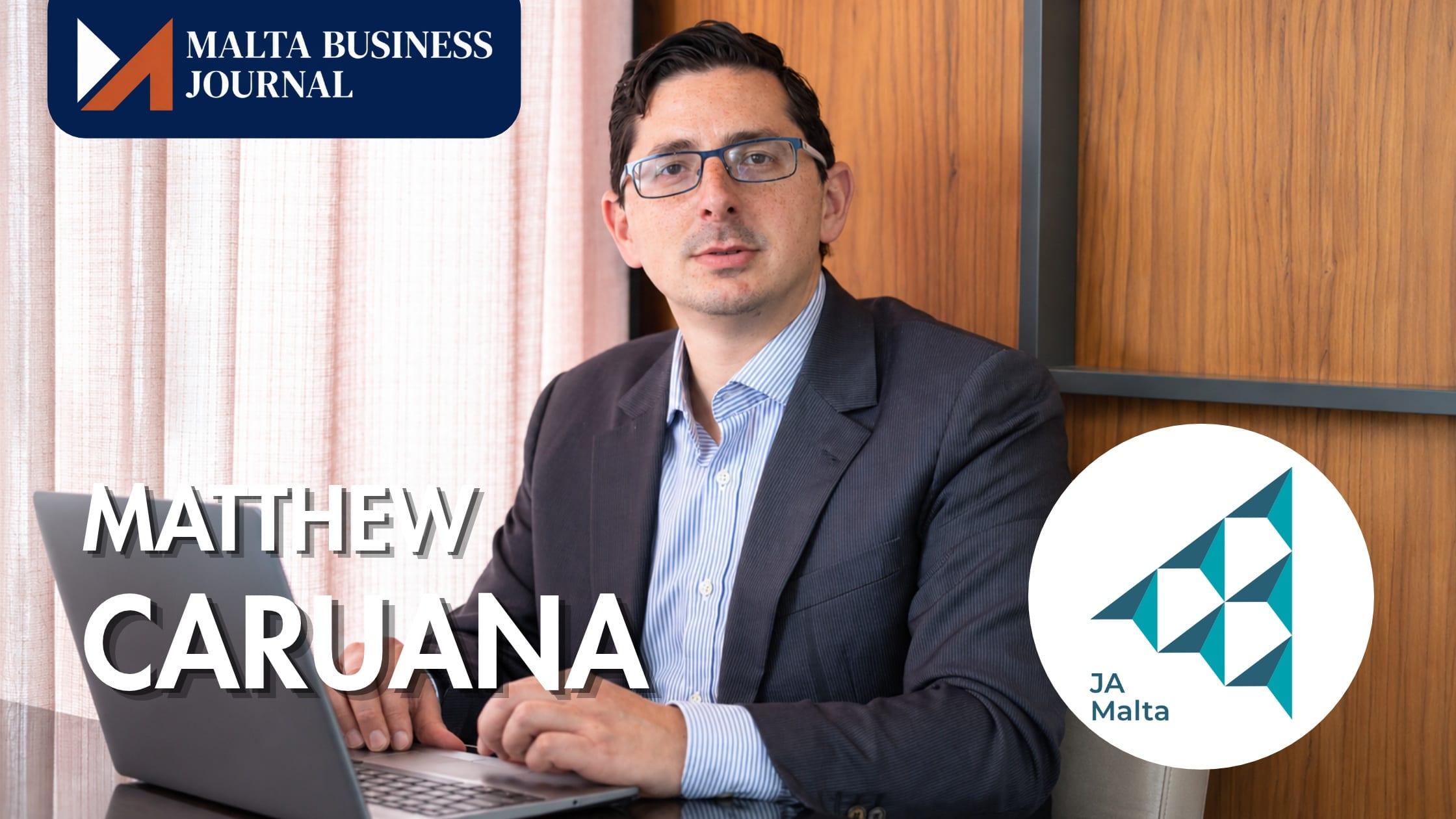
JA Malta CEO Matthew Caruana explains how practical challenges build entrepreneurial confidence and why employers should stay involved after events end. He argues that Malta’s 2027 events calendar should be judged by the skills, relationships and opportunities participants develop.
A young person who puts an idea before a real customer has to explain the problem it solves and respond to questions they may not have anticipated. For Matthew Caruana, the confidence gained from meeting that challenge is part of what entrepreneurship education should deliver.
In this MBJ 1:1 interview, the CEO of JA Malta explains why those experiences matter across a young person’s future career. He calls for employers and mentors to stay involved after competitions end, and for organisers to follow what participants go on to do.
Learning through responsibility
We begin with what an entrepreneurship event should give a young person. Caruana places the learning in the decisions participants have to make themselves.
“Enthusiasm is a good starting point, but it needs to be channelled into action. An effective entrepreneurship event should give young people the opportunity to identify a problem, develop a solution, test an idea and explain why it has value to others.
“The real learning happens when they have to make decisions, work as a team, manage limited resources and respond to feedback. These experiences help develop initiative, problem-solving, communication and resilience.
“At JA Malta, we believe young people learn best when they move beyond theory and experience what it means to put an idea into practice. The objective is not necessarily to create a business immediately, but to build the confidence and skills to turn ideas into action, whether as future entrepreneurs, employees or leaders.”
Testing an idea in front of real customers
That responsibility becomes tangible when an idea meets an audience beyond the classroom. He explains how presenting to customers and business leaders can change a student’s expectations of themselves.
“They learn that a good idea is not enough. It must solve a genuine problem, meet a need and offer something that people value.
“Presenting to real customers and business leaders also challenges young people to communicate clearly, justify their decisions and respond to questions they may not have anticipated. They discover that feedback is not only criticism; it is an opportunity to improve.
“Just as importantly, they begin to see themselves differently. A young person who has researched a problem, developed a solution and confidently presented it to an experienced professional gains evidence that they are capable of doing things they may previously have considered beyond their reach.
“Entrepreneurial confidence grows when young people experience themselves succeeding at something challenging, rather than simply being told they have potential. This is our theory of change, by doing one small challenge and seeing it through, students become more confident, building on their self-efficacy and youth who believe they will succeed are more likely to actually succeed.”
Keeping employers involved after the showcase
The experience also raises a question for employers and mentors. Caruana wants their involvement to continue after the competition, giving students ways to apply what they have learnt.
“The end of an event should be the beginning of the next stage of learning. Mentors and employers can make a meaningful difference by offering follow-up conversations, workplace visits, practical challenges, job-shadowing opportunities, continue mentoring and introductions to relevant professionals.
“Not every student will want to pursue the business idea they presented, and that should not be the expectation. The important thing is to help them build on what they have learnt and understand how those skills apply in the workplace and in future opportunities.
“Businesses should also think about how they can remain accessible to young people beyond a single sponsorship or judging commitment. A sustained relationship, even if it involves only a few well-planned interactions each year, can have more value than a one-off appearance.
“For JA Malta, collaboration between education and business is essential because it connects young people’s learning with the realities, expectations and opportunities of the world of work.”
Turning introductions into working relationships
Young people have a part to play in sustaining those connections. Asked how they can make a conversation worthwhile, he sets out the preparation and follow-through he expects.
“Preparation and follow-up matter as much as the event itself.
“Before attending, young people should research the people and organisations they expect to meet, prepare a short introduction and identify two or three questions they genuinely want answered. They should be able to explain what they are working on, what they hope to learn and where they would value advice.
“Afterwards, they should follow up promptly with a personalised message, referring to something specific from the conversation. If someone offered advice or suggested a next step, they should act on it and share the outcome.
“The aim should not be to collect as many business cards or LinkedIn connections as possible. It should be to develop a small number of meaningful professional relationships based on curiosity, mutual respect and follow-through.
“Networking is not about who you meet; it is about what you do with the opportunity to connect.”
Measuring what participants go on to do
The question of follow-through also applies to organisers. Caruana calls for a careful assessment of the skills and opportunities an event helps develop over time.
“Attendance, participation and satisfaction are useful indicators, but they tell only part of the story. If we want to understand the lasting value of an event, we need to look at what happens afterwards.
“For young people, this could include changes in entrepreneurial confidence, practical skills, understanding of business, willingness to take initiative and ability to communicate ideas. Follow-up assessments can establish whether participants have applied what they learnt, continued developing a project, pursued further training or built relationships with employers and mentors.
“For participating businesses, useful measures could include the quality of engagement with young people, the development of future talent pipelines and opportunities for continued collaboration with education providers.
“At a wider level, the ambition is to contribute to a workforce that is more adaptable, innovative and capable of responding to economic change. These outcomes take time to emerge, so event organisers should establish clear objectives at the outset and track progress beyond the event itself.
“We should be careful not to attribute wider economic outcomes to one event alone. The value lies in understanding how events contribute to a broader ecosystem of learning, opportunity and business engagement.”
Using AI to prepare for human contact
Digital tools can support that preparation and follow-up. He sees a role for AI in helping young people test ideas, while keeping personal judgement and trust central to learning.
“Digital tools and AI can make events more targeted, efficient and accessible. They can help organisers understand audiences, tailor communications, prepare learning materials, support participants in developing and testing ideas, and manage follow-up more effectively.
“For young people, AI can also provide a useful environment in which to explore alternatives, practise presentations, challenge assumptions and receive initial feedback. However, they still need to learn how to question the outputs, verify information and make their own judgements.
“The distinction is important: technology can help people prepare for meaningful interactions, but it cannot replace the trust built through a conversation with an experienced entrepreneur, the encouragement of a mentor or the experience of presenting an idea to a real customer.
“We should use AI to improve the quality of human engagement, not to remove the human element from learning. That also means being responsible about accuracy, privacy and the use of personal information, particularly when working with young people.”
Connecting Malta’s events to its future workforce
Looking towards 2027, Caruana wants Malta’s events calendar to create clearer routes between education and business. He sets out how organisers and employers could make that continuity work.
“Malta should place greater emphasis on continuity, collaboration and measurable outcomes. Rather than treating business events, entrepreneurship competitions, education initiatives and networking opportunities as separate activities, we should look at how they can connect into a more coherent pathway for young people and businesses.
“First, organisers should define the intended outcomes of each event more clearly. Is the purpose to develop skills, connect employers with future talent, support business innovation or create opportunities for young entrepreneurs? Clear objectives make it easier to design the right experience and measure its value.
“Second, businesses should be encouraged to engage beyond sponsorship. Contributing mentors, real-world challenges, workplace experiences and follow-up opportunities can create a more lasting return for both participants and employers.
“Third, we should make better use of the connections already created. A shared approach to follow-up, with appropriate consent and data protection safeguards, could help participants find relevant opportunities and help organisers understand which activities lead to sustained engagement.
“Finally, Malta should invest in events that bring education and business closer together and give young people meaningful responsibility, rather than limiting them to the role of audience members.
“The opportunity for 2027 is to move from measuring the success of an event by the number of people in the room to measuring what those people learn, who they connect with and what they go on to do.
“For JA Malta, the underlying principle is straightforward: developing entrepreneurial confidence is an investment in Malta’s future talent, not simply in its future business owners. Young people who learn to recognise opportunities, solve problems, work with others and make informed decisions will be better equipped to contribute to businesses and communities, whatever career they ultimately choose.”