
Tas-Silġ exhibition brings 4,000 years of Maltese history into one room
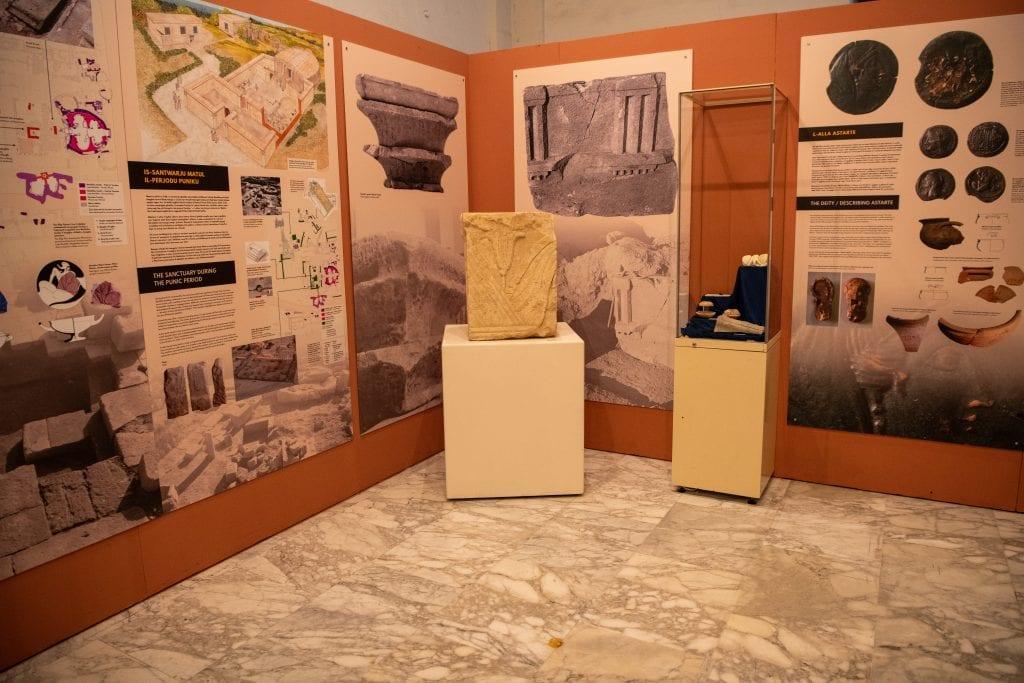
A new Heritage Malta exhibition at the National Museum of Archaeology showcases artefacts from Tas-Silġ, the island's longest-used archaeological site.
Artefacts recovered from successive excavations at Tas-Silġ have been brought together in a new Valletta exhibition exploring more than 4,000 years of worship, trade and cultural exchange.
“Tas-Silġ: A Place of Encounters and Worship for Millennia” runs at the National Museum of Archaeology until 31 May 2027. Admission is included in the museum ticket.
The exhibition is a collaboration between Heritage Malta, the University of Malta, the Italian Archaeological Mission in Malta and the Superintendence of Cultural Heritage.
Overlooking Marsaxlokk Bay, Tas-Silġ developed from a Late Neolithic megalithic complex into a religious centre used across successive periods. Its history encompasses Phoenician-Punic and Roman worship, a Byzantine church complex and later agricultural use.
The exhibition uses archaeological objects to examine the people and networks connecting the sanctuary with the wider Mediterranean.
Among the finds is an agate crescent bearing a cuneiform inscription from Nippur in Mesopotamia. Dating to the 13th or early 12th century BC, it may have reached the sanctuary as an offering centuries later.
Other exhibits explore the worship of Astarte, including an ivory ear possibly associated with a cult statue, alongside objects illustrating links with ancient Italy.
New digital reconstructions show how the site and surrounding landscape changed over time. They are also intended for a digital platform being developed to support interpretation at Tas-Silġ itself.
The exhibition advocates a more unified approach to managing and conserving the archaeological complex, including areas divided by the modern road.
An accompanying catalogue is available from Heritage Malta. The museum currently opens daily from 09:00 to 17:00, and the exhibition space is fully accessible.