
Marsa maritime hub bond repaid after decade-long investment
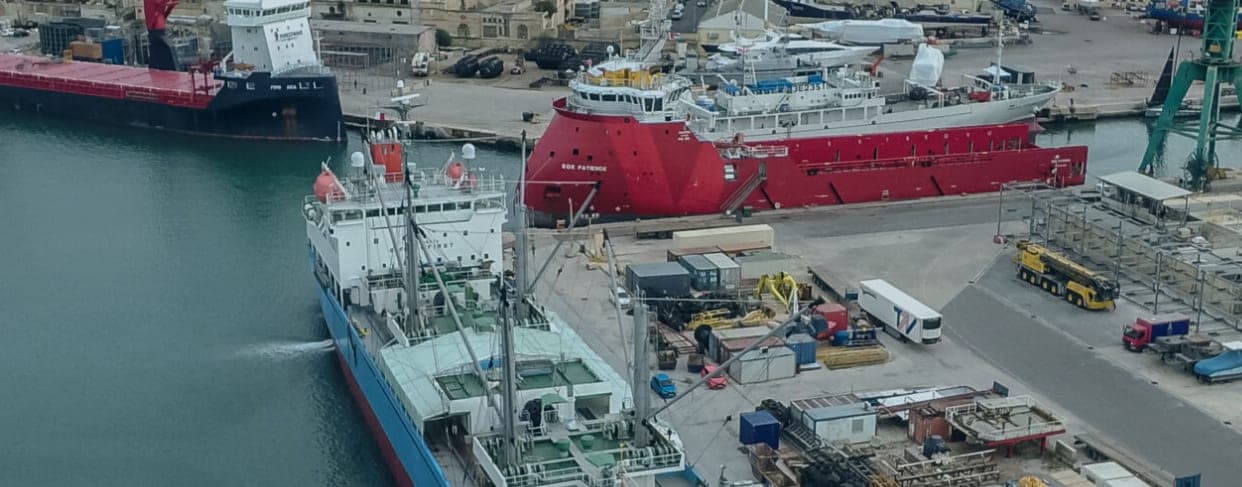
Mediterranean Maritime Hub Finance has repaid its €15 million bond in full, closing a ten-year debt instrument that funded the Marsa hub.
Full repayment closes a decade-long bond issue, with further investment planned for 2027 as the Marsa facility develops its role in vessel care, offshore support and maritime services.
Mediterranean Maritime Hub Finance plc has repaid its €15 million bond in full, returning investors’ capital together with all interest accrued up to its maturity on 14 October 2026.
The redemption concludes the company’s 4.8% unsecured bond issue, launched in 2016 to support the development of the Mediterranean Maritime Hub at the former Malta Shipbuilding site in Marsa. It settles a significant financing obligation as the wider group prepares for its next phase of development within the Grand Harbour.
For Malta, the significance extends beyond the repayment itself. The hub brings together infrastructure and specialist services that allow international maritime activity to generate business locally, from engineering and maintenance to logistics and technical support.
Investment beyond the bond MMH says it has invested more than €45 million at the site since taking it over in 2016. That expenditure has covered quaysides, dredging, vessel-lifting equipment, workshops, sheds and supporting facilities. Further investment is planned for 2027, although the latest operational update does not specify its value or detailed scope.
The facility serves offshore operators, commercial vessels and yachts, combining waterfront access with space for technical work and shore-based support. This mix gives the site several routes to market across industries with different operating cycles.
Its offshore role was illustrated on 13 October by the arrival of OCEAN MVM, a jack-up drilling rig formerly known as Noble Resolve, following its acquisition by Ocean Oilfield. Bringing the rig into the hub required coordination between pilots, tug crews, port authorities, Customs and the operator’s teams.
Such operations demonstrate why a maritime base depends on more than available berthing space. The ability to receive and support a large offshore asset rests on a network of specialist businesses and experienced personnel working together.
A changing business mix The group’s recent financial performance also shows how its activities are evolving. Revenue reached approximately €20.1 million in 2025, compared with €18.4 million in 2024, while profit after tax recovered to around €378,000 from a loss the previous year.
Vessel Care became its largest revenue contributor, generating approximately €6.9 million, or about 35% of group turnover. Storage, logistics and shore support contributed a further €3.7 million. These figures illustrate the growing importance of work delivered through the hub’s facilities, alongside its established offshore and personnel services.
The bond redemption follows preparations involving fresh capital. An investment agreement announced in April envisaged new investors taking a 49% stake in MMH Holdings Limited, with their investment and additional liquidity from existing shareholders intended to fund the repayment and final coupon.
With the maturity now settled, the focus shifts to the group’s ability to sustain operating performance, generate cash and deliver its development plans.
The wider opportunity for Malta For Malta’s maritime economy, facilities such as the Marsa hub provide a practical link between the country’s location and the commercial value it can retain from visiting vessels and offshore assets.
A vessel calling for maintenance can require engineering, fabrication, inspections, spare parts, provisioning and crew support. When these services are available locally and delivered efficiently, a port call can create work for several businesses beyond the facility receiving it. The commercial opportunity lies in increasing the value of each visit through dependable, specialist services.
This is particularly relevant to Malta, where waterfront industrial space is finite. Making productive use of existing maritime sites can support skilled employment and export earnings, provided investment is matched by operational standards, environmental management and a reliable supply of trained people.
The wider European industry is also changing. In March 2026, the European Commission adopted industrial maritime and ports strategies focused on competitiveness, decarbonisation, digitalisation, security and skills. These priorities point towards a sector in which technical capability and infrastructure quality will carry increasing weight.
For Maltese operators, that points to potential demand for more sophisticated maintenance, vessel upgrades, electrical and digital systems, and supporting engineering services. Capturing that work will require investment in equipment and training, as well as the ability to deliver projects safely and on schedule.
MMH’s repayment brings its ten-year bond commitment to a close. With further investment planned, attention now turns to how effectively the Marsa facility can convert its infrastructure into recurring business, stronger commercial performance and additional value for Malta’s maritime sector.