
Our thoughts on the Budget for 2027, did it go far enough for enterprise as it did for households?
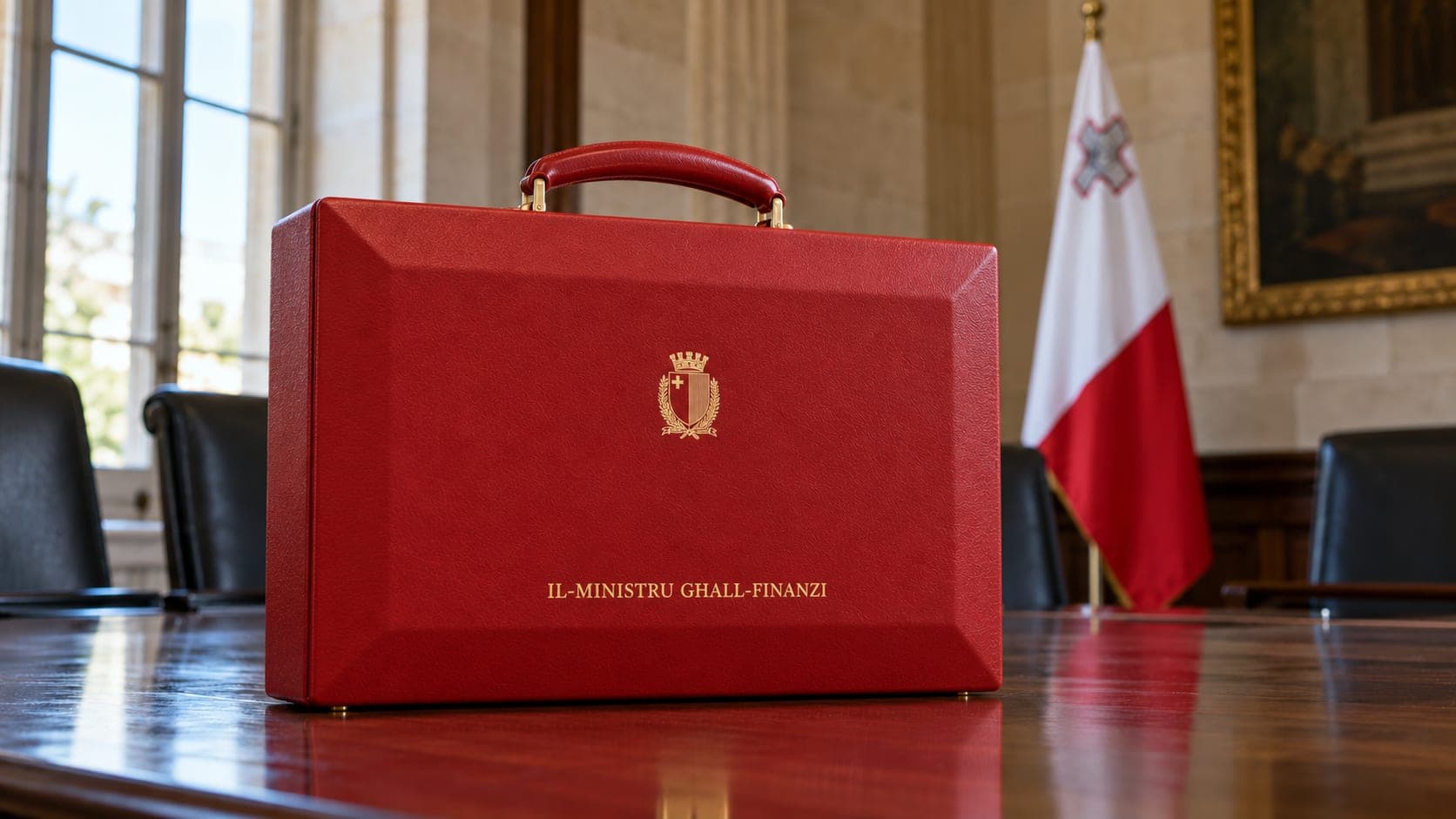
Malta’s Budget 2027 supports households and rewards some business reinvestment. MBJ examines why fair infrastructure contributions must be matched by wider enterprise reform, spending discipline and a more efficient state.
Malta’s Budget 2027 protects household spending power, maintains energy support and offers a new tax incentive for smaller companies retaining profits. It also raises tourism and work-permit charges as the government seeks to move the economy towards higher productivity. The direction contains measures worth supporting. The harder question is whether the Budget does enough to strengthen the businesses that must finance Malta’s prosperity.
A responsible welfare state depends on productive work, profitable enterprise and disciplined public finances. Supporting pensioners, families and people who genuinely need assistance is compatible with that principle. But the success of a Budget should also be judged by whether it makes investment more attractive, rewards effort and reduces the cost of dealing with government.
The Malta Chamber’s response identifies a similar weakness: it welcomes household support but finds the programme for economic transformation insufficiently specific. Its calls for wider business tax relief, public-service efficiency and structural reform deserve attention.
The test for 2027 is whether Malta can generate more value from its businesses and public resources, while ensuring that growth improves the lives of the people who live here.
Growth continues but operating pressures remain
The government forecasts real economic growth of 3.8% in 2027, following an estimated 4.1% in 2026. Private consumption is expected to rise by 3.8% and investment by 7.0% next year. Inflation is forecast at 2.7%, with unemployment at 3.2%.
These are government projections, rather than guaranteed outcomes. They nevertheless describe an economy in which demand is expected to keep growing and spare labour remains limited. Businesses should therefore distinguish between opportunities to increase sales and their ability to convert those sales into stronger margins.
The commitment to leave the VAT rate and social security contribution rates unchanged provides continuity. However, the new sector-specific charges mean that unchanged headline rates do not translate into an unchanged cost of doing business.
Tax relief gives smaller companies more room to invest
A new framework will allow companies with turnover not exceeding €1 million to benefit from a 25% tax rate instead of 35% on profits retained or reinvested in the business. The speech explicitly states that the 35% rate will continue to apply when profits are distributed as dividends.
For eligible profitable companies, this could leave more resources available for equipment, software, training or working capital. It gives owners a clearer incentive to strengthen the business before withdrawing its earnings.
The scope matters. This is a targeted measure for qualifying companies, rather than a general reduction covering every business or every form of income. It offers no immediate profit-tax saving to a business making a loss, and companies above the turnover threshold fall outside the framework described in the speech.
Detailed rules will need to establish how the measure interacts with the existing company tax system, how later distributions are treated and what happens when a growing company crosses the €1 million threshold. Those details will determine how confidently owners can use the relief in investment planning.
The Chamber argues for a 25% corporate rate across businesses, with a lower rate for those fully meeting their legal obligations. A broader reform merits examination, alongside its fiscal cost and interaction with Malta’s tax system. Any reduction should be funded credibly, rather than justified by assuming that growth will automatically replace every euro of revenue forgone.
The principle should be to let businesses retain more of what they earn while making the state more efficient. Relief should also support firms as they grow, rather than create an incentive to remain below an arbitrary size threshold.
Support households while strengthening economic independence
The government will maintain stable electricity, gas and fuel prices, with approximately €400 million committed to subsidies and related support in 2027. This offers a significant degree of cost visibility to businesses, particularly those with substantial energy or transport requirements.
The commercial benefit is predictable expenditure. Companies can price contracts and plan production with less exposure to immediate international energy-price movements. That protection has value, but the subsidy still has to be financed. Stable bills should be accompanied by investment that makes Malta less exposed to future shocks.
Household measures should also support domestic demand. The speech continues the programme of income-tax reductions for eligible families with children and announces a €10 weekly pension increase, including the cost-of-living adjustment.
The Super Bonus is scheduled for the first quarter of 2027 and will be calculated using 2025 as the base year. Eligible recipients with employment income of €12,000 or more will receive a tax-free €1,000 payment, with lower payments for lower eligible income bands. The speech also includes self-employed people, working pensioners and part-time workers within the scheme.
Retailers and service businesses could benefit from that additional purchasing power. But a one-off payment creates no lasting increase in productivity by itself. Alongside immediate relief, policy should give greater weight to measures that improve the sustained return from working, investing and building a business.
That requires a clearer distinction between protecting genuine need and spreading support broadly without a demonstrated long-term return. Malta can preserve its social safety net while asking whether each additional commitment is targeted, affordable and more effective than an alternative use of the money.
On energy, the Chamber proposes redirecting subsidy savings towards renewables when international prices fall. That offers a practical route towards greater resilience. Grid reliability, storage and commercially sound energy investment should reduce dependence on repeated emergency support.
Fair contributions should support a better labour model
The cost-of-living adjustment will be €6.41 per week. The national minimum wage will rise by €10.41 per week, including COLA. The two figures should not be added together when calculating the minimum-wage increase.
The application fee for a new work permit for a worker from outside the EU will increase from €600 to €800. A separate €400 annual infrastructure contribution will apply to new applicants and renewals, with an exemption for minors. The speech also signals increases to several other Identità permit fees.
There is a legitimate case for requiring economic activity to contribute more directly towards the infrastructure it uses. Malta has limited physical capacity, and an expanding workforce creates demands on transport, housing and public services. Businesses should not assume that those costs can indefinitely be absorbed elsewhere in the economy.
Changes to eligibility for free public transport and free childcare could also influence the attractiveness of working in Malta. Eligibility will be retained for Maltese and Gozitan citizens, resident EU citizens and long-term residents. Existing users of free childcare retain their eligibility until their children cease to qualify.
The Chamber warns that additional TCN costs may ultimately fall on employers and questions the clarity of the accompanying productivity incentives. That concern strengthens the case for implementation discipline. It does not, by itself, invalidate the principle of a fair contribution.
The policy should encourage investment in Maltese workers, better wages supported by productivity, training and technology. Necessary overseas recruitment should operate through predictable rules and efficient processing, with workers treated fairly. Raising a fee should not become a substitute for improving the system that collects it.
Automation cannot replace every role in hospitality, care, construction or specialist services. The government therefore needs a workable transition, with clear investment incentives and attention to essential skills. Otherwise, a defensible policy objective risks becoming little more than a higher annual bill.
Tourism should contribute to the quality it depends on
From 1 January 2027, the accommodation eco-contribution will be €8 per person per night in collective accommodation, capped at €64 per person. For short-let apartments, it will be €10 per person per night, capped at €80 per person. The speech states that the contribution applies to people over 18 and removes the accommodation eco-contribution requirement for English-language schools.
The government expects around €182 million in revenue from these revisions. It also announces a €10 contribution for cruise passengers who disembark and re-embark on the same vessel in Malta, excluding passengers beginning their cruise here, and a €5 tourist contribution through the existing Blue Lagoon booking system.
Tourist fast-ferry fares will increase by €3 per journey. On the Gozo ferry, the announced non-resident fares are €11 for an adult, €7 for a child and €22 for a vehicle with its driver.
The Chamber supports higher tourism contributions where the proceeds improve the tourism product and localities. That principle is sound. Residents should see tangible benefits from the economic activity around them, and visitors should contribute fairly towards the infrastructure and services that make their stay possible.
The obligation on government is equally clear: show where the money goes. Cleaner streets, better public spaces and dependable transport should be measurable outcomes. The commercial effect of the combined visitor charges should also be monitored; the speech does not quantify how tourists will adjust their bookings or spending.
The planned review of airline incentives, with greater emphasis on shoulder and winter months and higher-value markets, could help improve seasonality. Its effectiveness will depend on implementation and whether the additional visitor contributions translate into visible improvements.
Infrastructure spending creates opportunities beyond construction
Capital expenditure is projected at almost €1.5 billion in 2027, including approximately €390 million in EU funding. The speech also identifies around €75 million for electricity distribution investment next year.
Continued work on the second interconnector, electricity storage, roads, port facilities and healthcare infrastructure can support demand for contractors, engineering firms, technology providers and professional services. More reliable infrastructure can also reduce disruption for businesses outside those supply chains.
The speech distinguishes projects under way from longer-term studies, including a third interconnector and a proposed offshore wind farm. These should not be treated as capacity that will necessarily become available during 2027.
Malta Enterprise will continue incentives supporting digitalisation, automation and investment that creates higher added value. The government also identifies family offices, crypto businesses, fintech and aircraft leasing as areas for continued regulatory and administrative development.
These commitments support diversification. Their value will depend on accessible schemes, clear eligibility rules and delivery schedules. Businesses should be able to compete internationally through better products, specialist skills and efficient operations. A small, open economy has a strong national interest in helping firms sell beyond its shores.
Tax enforcement brings benefits and implementation work
The Budget proposes a VAT reverse-charge mechanism for covered construction transactions, moving responsibility for accounting for VAT from the supplier to the purchasing business. Deduction of that VAT will remain subject to eligibility under the law.
It also announces stronger disclosure and valuation measures for property transactions involving airspace, to apply prospectively following consultation. Further measures include administrative penalties for failures to issue correct VAT invoices or fiscal receipts, and guidance on VAT treatment of ready-to-eat food sold by supermarkets, minimarkets and convenience shops.
Consistent enforcement can protect businesses that meet their obligations from unfair competition. It should be accompanied by simpler rules, proportionate procedures and clear guidance. Firms may need to adapt invoicing systems, contracts and accounting processes; the construction mechanism changes VAT accounting responsibility, rather than exempting transactions or reducing the VAT rate.
Government must meet the productivity standard it sets for business
The main gap is the practical route from a more expensive growth model to a more productive one. The speech confirms investment incentives and infrastructure projects, but does not provide a detailed, costed transition plan for each of the sectors most exposed to higher labour and visitor charges.
Businesses should be able to see binding service standards for permits and grant decisions, simpler reporting requirements and clear responsibility when public projects miss their deadlines. Public bodies should be assessed on the quality and speed of the services they provide, and on what those services cost.
The state cannot credibly ask businesses to become leaner while treating its own spending as beyond challenge. Procurement, staffing requirements, duplicated functions and recurring programmes should face regular scrutiny. Savings from waste and inefficiency create room for productive investment and tax relief without weakening essential services.
Congestion belongs in the same economic calculation. Road and port investment matters, but the useful measures are reliable commuting times, efficient deliveries and fewer working hours lost in traffic. The speech needs to be followed by an operational plan with deadlines and published results.
New infrastructure contributions should also be transparent. Businesses and residents should be able to trace the proceeds to improvements, with progress reported publicly. Collecting more revenue is easier than demonstrating that it has been spent well.
The government projects a deficit of 2.6% of GDP and debt of approximately 46.8% of GDP in 2027. Those forecasts do not remove the need for expenditure discipline. A stable debt ratio can coexist with a rising cash debt burden, and the room to respond to the next shock depends on decisions taken now.
The missing detail in the speech should be supplied through implementation plans. This is a judgement about what the Budget explains, rather than a claim that no relevant programmes exist elsewhere.
The business test for 2027
The Budget will affect companies unevenly. Eligible smaller firms retaining profits gain a potential source of investment funding. Businesses serving local households may benefit from stronger disposable income, while suppliers involved in infrastructure and digital transformation have opportunities linked to investment.
Tourism operators and businesses relying on non-EU recruitment must assess higher charges alongside wage costs and customer pricing. Management teams should update their assumptions, examine the eventual tax rules and prioritise investments that produce measurable improvements in output or service quality.
A credible pro-enterprise approach supports fair contributions towards national infrastructure while demanding a more efficient state. It rewards work, investment and compliance, protects those who need help, and recognises that every public commitment ultimately has to be paid for.
Budget 2027 contains useful measures. Its lasting achievement will depend on whether the follow-through makes Malta a better place to build, employ, invest and compete. Supporting household income matters. Strengthening the productive economy that sustains that income must carry equal weight.
Editorial based on the Budget 2027 speech presented on 26 October 2026 and the Malta Chamber’s response published the same day. Budget figures and eligibility conditions are retained from the speech. Forecasts are government projections; assessments and policy preferences are the editorial position. Measures remain subject to legislation and implementation guidance.