
The Tapestries That Survived Pirates and War: A 300-Year-Old Asset for Malta's Tourism Economy
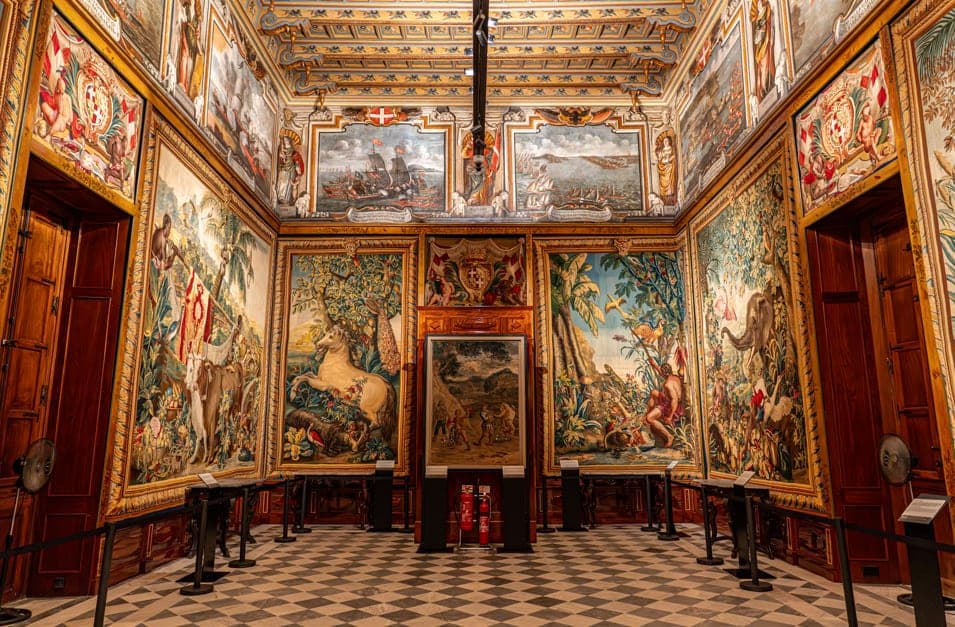
The story of how Grand Master Perellos' tapestries arrived in Malta is one of piracy, ransom, and survival. Today, they remain a unique draw for visitors.
Malta's tourism pitch rests on layers of history that few destinations can match. Among the most valuable of those layers is a set of tapestries that survived pirates, ransom, and war to hang in the Grand Master's Palace for more than three centuries.
Commissioned in 1708 by Grand Master Ramon Perellos as his gioia – a personal gift to the Order upon his appointment – the tapestries were woven at the Gobelins manufactory in Paris. The contract called for ten large wall tapestries, seven window hangings, and one door hanging, all to be completed by March 1710.
Their journey to Malta was anything but routine. On 2 June 1710, mules carried the cargo from Paris to Marseille, where it was loaded onto a sailing vessel. North African pirates seized the ship and refused to release it until a handsome ransom was paid. The tapestries finally reached the Grand Harbour at the end of summer.
Perellos wanted the set to resemble the tapestries of Versailles, but with adjustments. The Versailles set contains eight large tapestries; Malta's has ten. The designs, known as Tenture des Indes, were based on drawings made by Albert Eckhout and Frans Post during a seven-year expedition in Africa and South America in the first half of the 17th century. Those drawings were presented to King Louis XIV, who passed them to the director of the Gobelins manufactory.
The scenes depict elephants, rhinoceroses, zebras, leopards, figures in traditional attire, and insects and birds never seen before in Europe. Perellos left his mark on the set: his heraldic arms appear in the upper border of the large tapestries and are carried by slaves from Turkey and Barbary in the window and door hangings.
What gives these tapestries their exceptional commercial and cultural value is their survival. This is the only complete surviving set woven from the original cartoons. Other masterpieces were stolen during foreign occupations or lost in the destruction of the Second World War. The Palace tapestries remained in place, hanging in the hall named after them for over 300 years.
For Malta's tourism economy, that continuity is a rare selling point. The tapestries are not just museum pieces; they are a living part of the Palace experience that draws visitors from around the world. In a market where heritage assets are increasingly commoditised, authenticity and provenance matter. The story of the tapestries – from Parisian workshop to pirate ransom to Valletta – adds a narrative layer that no replica can replicate.
The business lesson is straightforward: long-term preservation of unique cultural assets pays dividends in destination appeal. Three centuries after Perellos wrote to his ambassador in Paris, the tapestries continue to generate interest, footfall, and revenue for Malta's heritage sector.